The Design and Configuration
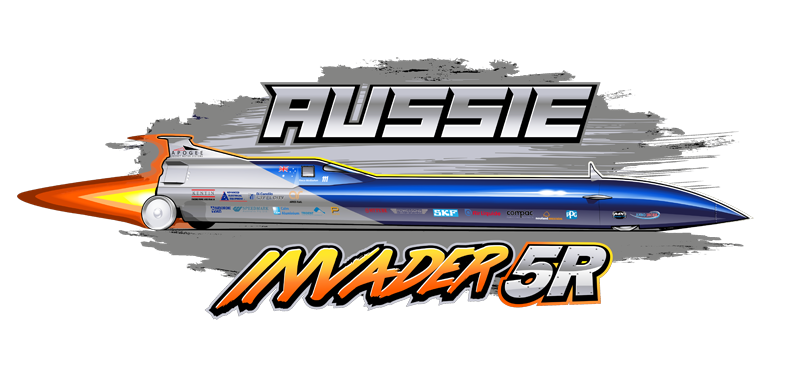
Aussie Invader 5R is a rocket powered car using a single, very powerful liquid bi-propellant engine. We designed the car to keep it as simple as possible, with the least number of moving parts that could fail. We decided to use a pressure-fed propellant system to push the fuel and oxidiser into the engine. We were not going to use mechanical or electrical pumps, as most rocket engines do.
The use of pressure fed systems also drastically reduces overall system complexity, cost and development times while hopefully increasing reliability. The other thing that was a real headache was that we would be firing our rocket horizontally (along the ground). Ideally, liquid bi-propellant rockets are designed to be fired vertically (straight up).
Many people have asked what does 62,000 lbs of thrust look like and the YouTube video on the left is of a hot fire testing of the Pratt & Whitney, 54,000 pound thrust, Nitrogen Tetroxide and Monomethyl Hydrazine engine from a Boeing program and gives some idea of the power rocket engines can produce.
Trajectory and Performance Modelling
The following graphs detail the updated performance characteristics of the simulated Aussie Invader 5R’
Speed vs. Time
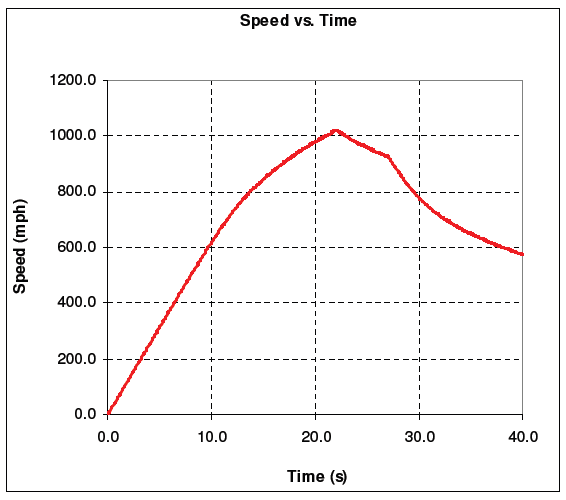
As your can see from this diagram, Aussie Invader 5R will take about 22 seconds to reach a 1000MPH on a full high speed run. The sound barrier (around 760MPH) is broken in about 13 seconds. The car will slow during the measured mile, as the engine will be throttled back. Losing speed is far more time consuming than acceleration, with speed being lost, during the braking process.
Speed vs. Distance
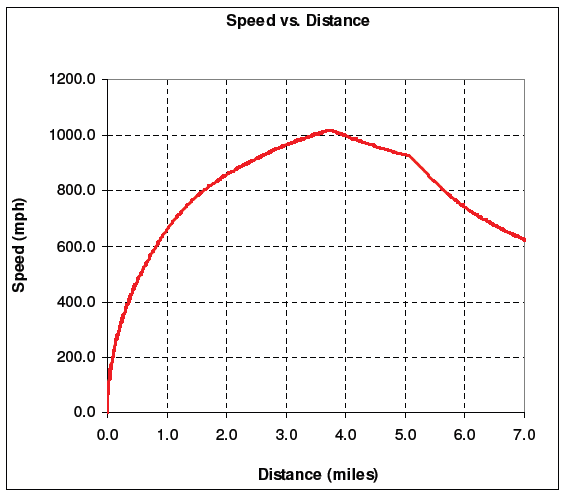
Aussie Invader 5R needs just over 3.5 miles to reach maximum speed and enter the measured mile. The car will take a lot further distance to stop, than it does to accelerate to a 1000MPH, due to the fact the engine will need to be “stepped down” in power. This gradual power reduction is to stop the driver experiencing massive negative 16G and passing out, as the car exits the measured mile.
Engine Thrust vs. Time
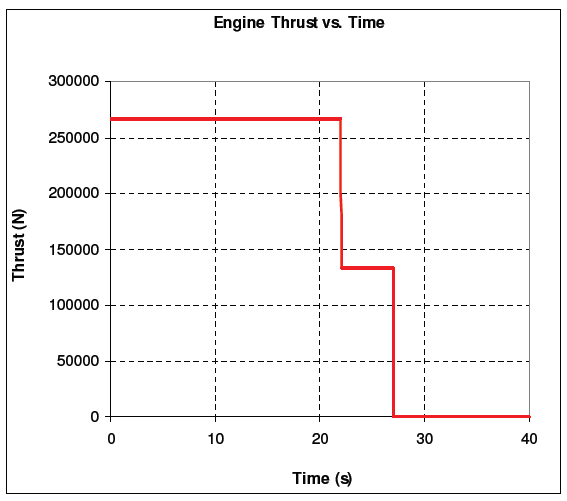
The engine produces maximum thrust, the moment it is fired, with the car accelerating through the sound barrier and on to the measure mile. Once the car enters the measured mile, the engine is throttled down to 60% of power to hold the cars speed steady and stop it accelerating and over stressing the wheels. Once out of the measured mile the engine is shutdown in a controlled fashion.
Acceleration vs. Time
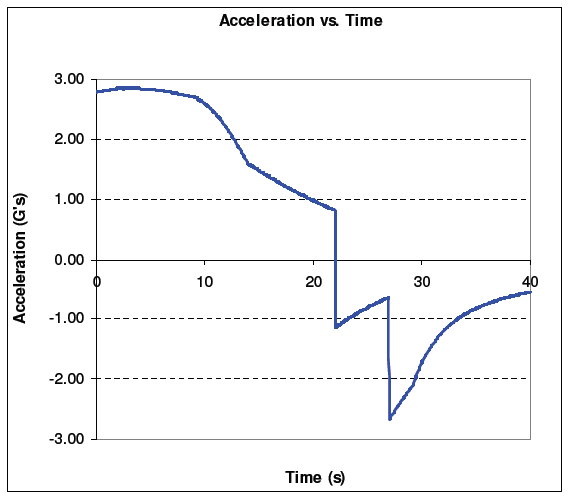
The car needs to weigh about 9 tonnes, when the engine is ignited, so the car does not accelerate too quickly and exceed 3G. If it does exceed 3G, it could mean the cars wheels will not be able to spin up fast enough and lose traction, causing the car to slide, skid or become unstable. The cars weight changes drastically during a run, as 2.8 tonnes of propellant is burnt in about 22 seconds!